Discovery and Research of the Historical Knowledge of the Gaya Region
- Research Activities
- Gaya National Research Institute of Cultural Heritage
- 현재 위치Discovery and Research of the Historical Knowledge of the Gaya Region
We have planned and conducted various projects comprising investigation, research and publication, utilizing our accumulated historical knowledge and resources on Gaya, in order to meet the demands for research aimed at establishing the historical identity of the Gaya cultural sphere. Our major achievements include:
In order to meet the research demands from local communities and academia, the institute has provided research services based on its database, released research findings through academic conferences, and promoted interdisciplinary research involving the humanities and natural sciences.
The institute’s major academic achievements include the recreation of the body of a girl from the Gaya period based on her bones, the construction of a website dedicated to studies on ancient wooden slips, the reconstruction of the ancient surroundings of Seongsansanseong Fortress, and the research on the location, construction, and surroundings of ancient Gaya-style burial mounds.
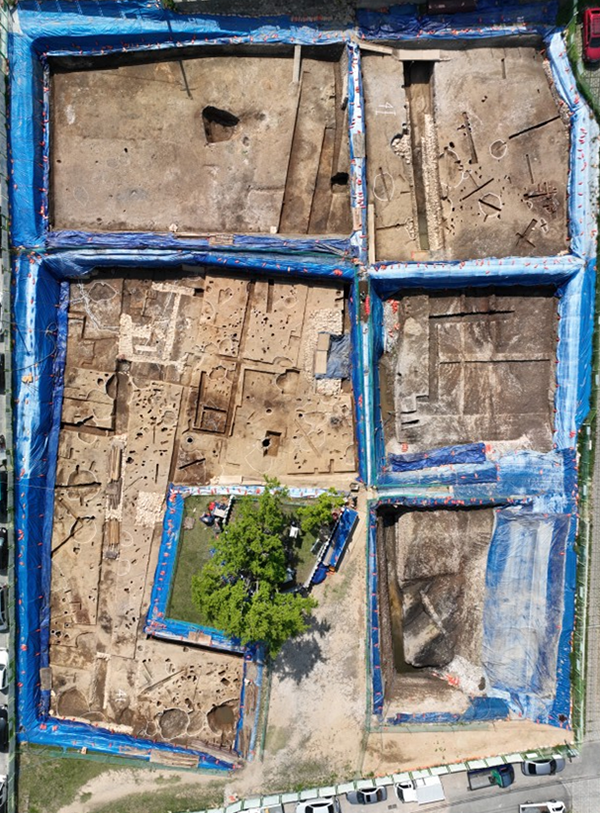
Bird’s-eye view of Area ‘A’ at the Bonghwang-dong Site, Gimhae
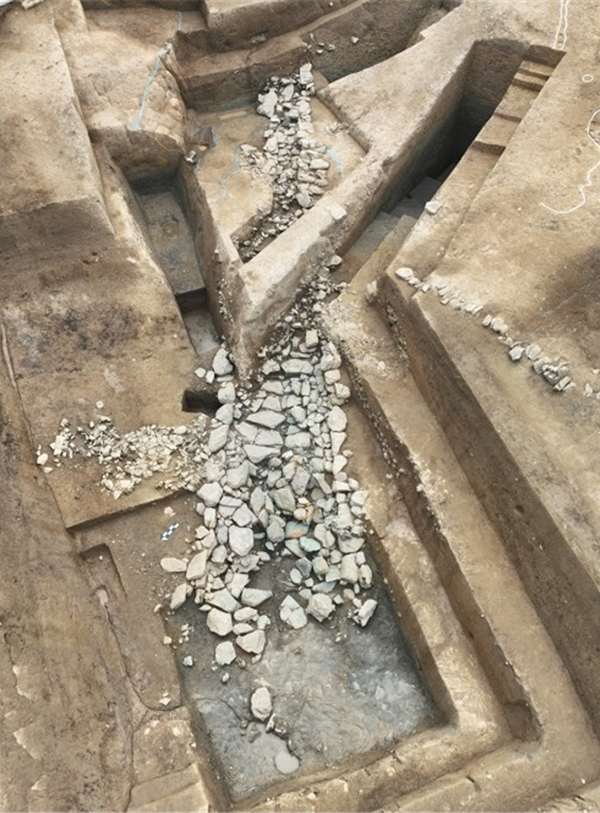
Drainage Channel in Section 1 of the Gaya-ri Site, Haman (Presumed Site of a Granary)
Stone Caves in China
Wooden Tablets of the Early Korea
Wooden Tablets of the Early Korea – Revised
Prehistoric Culture of the Gyeongsangnam-do Region
Tombs of Gaya
Wooden Tablets from Haman Seongsansanseong Fortress
Fortresses of the Gyeongsangnam-do Region
Early Wooden Ware of Korea
Temple Sites of the Gyeongsangnam-do Region
Secret Codes on Wood: Wooden Tablets (2009)
Reconstruction of Gayans
The Special "Bisabeol" Exhibition (2010~2011)
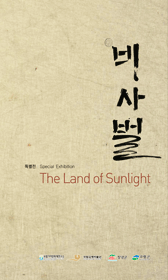
The "Bisabeol" Exhibition, organized by Gimhae National Museum, the Changnyeong Museum, and the Daegaya Museum, as well as our institute, introduced the ancient tombs discovered in the Changnyeong region by the Gaya National Research Institute of Cultural Heritage from 2004 to 2008. The exhibition’s title, Bisabeol, is an old name for the Changnyeong region, recorded in the Samguk sagi (History of the Three Kingdoms). The main exhibits of the exhibition were finds from the Ancient Tombs in Songhyeon-dong (Historic Site), which, along with the Ancient Tombs in Gyo-dong, are one of the most important clusters of elite-class tumuli in Changnyeong. The tombs attracted considerable attention both at home and abroad due to the array of interesting artifacts and relics found intact, such as a boat-shaped camphor coffin, an assortment of ornaments, harnessry, and battle gear similar to those found in the large-scale Silla tumuli such as Hwangnamdaechong and Cheonmachong, and skeletons attesting to the practice of human sacrifice.
The “Bisabeol” Exhibition, organized by Gimhae National Museum, the Changnyeong Museum, and the Daegaya Museum, as well as our institute, introduced the ancient tombs discovered in the Changnyeong region by the Gaya National Research Institute of Cultural Heritage from 2004 to 2008. The exhibition’s title, Bisabeol, is an old name for the Changnyeong region, recorded in the Samguk sagi (History of the Three Kingdoms). The main exhibits of the exhibition were finds from the Ancient Tombs in Songhyeon-dong (Historic Site), which, along with the Ancient Tombs in Gyo-dong, are one of the most important clusters of elite-class tumuli in Changnyeong. The tombs attracted considerable attention both at home and abroad due to the array of interesting artifacts and relics found intact, such as a boat-shaped camphor coffin, an assortment of ornaments, harnessry, and battle gear similar to those found in the large-scale Silla tumuli such as Hwangnamdaechong and Cheonmachong, and skeletons attesting to the practice of human sacrifice.
The centerpiece of the Bisabeol exhibition was “Songhyeon,” a Gaya girl figure reconstructed from a skeleton thought to have been a human sacrifice. With Songhyeon as the heroine of the display, the history and culture of 5th and 6th century Bisabeol was manifested by archaeological findings from Changnyeong, in particular those from the Songhyeondong Ancient Tombs, in terms of three main topics: Bisabeol, The Ruler of Bisabeol, and The People of Bisabeol. More than 200 exhibits were displayed including not only those from Songhyeon-dong Tombs Nos. 6, 7, and 15 and those from the Gyeseong and Ancient Tombs in Gyo-dong, Changnyeong, but also those from Hwangnamdaechong and Geumgwanchong in Gyeongju, to show Bisabeol’s relationship with Seorabeol (or Gyeongju). Among the many exhibits were reconstructed items such as a reconstructed camphor coffin tree, the original of which couldn’t be displayed as it was being treated for preservation; Songhyeon, the reconstructed Gaya human sacrifice; and a reconstructed saddle - a product of the ancient saddle reconstruction project. In addition, photographs of excavation activities at the Gyo-dong and Songhyeon-dong sites during the Japanese colonial era and of the excavated objects taken to Japan were also displayed to remind us of the hardships experienced 100 years ago and the history of Changnyeong buried deep in the forest of our regrets.
The special exhibition, Bisabeol, began in July 2010 at Gimhae National Museum and continued into 2011, touring the Changnyeong Museum and the Daegaya Museum. This exhibition was the successful outcome of a collaborative project - involving local organizations and conducted with the aim of investigating, researching and displaying the region’s history and culture – that has made a significant contribution to the promotion of research on the region’s cultural heritage.
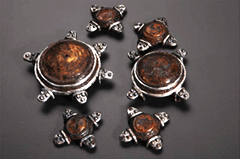
Horse strap decorations excavated from the Site No.7 in Songhyeon-dong, Changnyeong
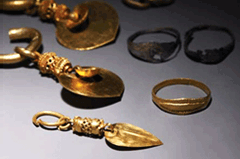
Gold and Silver Ornaments
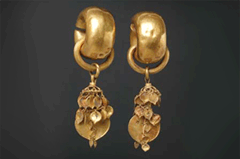
Gold Earrings
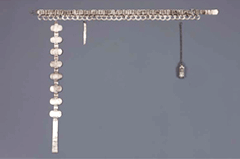
Silver Belt
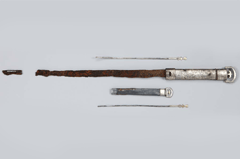
Long Sword with the Tri-leaf Ring Pommel
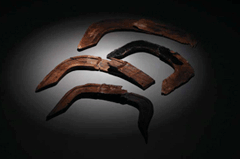
Lacquered Saddle Cover with Silver Ornaments
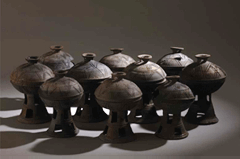
Plates with Bent Legs
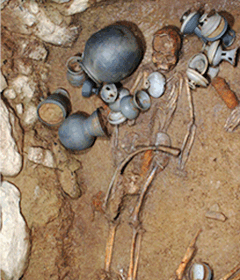
The appearance of human skeletons from the ancient burial No. 15 in Songhyeon-dong
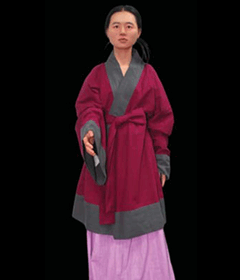
Restoration of human skeletons from the ancient burial No. 15 in Songhyeon-dong
Reconstruction of Gaya (2009)
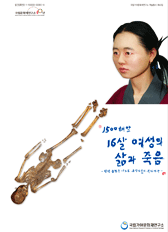
The project titled Reconstruction of Gaya was Korea’s first extensive interdisciplinary research project involving both humanists and scientists. The main subjects of the project were the four sets of human sacrifice skeletons discovered in Songhyeon-dong Ancient Tomb No. 15. It was conducted over a period of more than twelve months from July 2008 to November 2009, inviting scholars and experts from various disciplines in order to accomplish a comprehensive investigation of human remains from early period Korea. The areas of study and disciplines involved in this project include: Archaeology (Gaya National Research Institute of Cultural Heritage) Forensic Medicine, Anatomy, Plastic Art (Catholic Institute of Applied Anatomy) Genetics, Chemistry (Division of Conservation Science at the National Research Institute of Cultural Heritage) Physics (Korea Research Institute of Archaeological Science)
The project titled Reconstruction of Gaya was Korea’s first extensive interdisciplinary research project involving both humanists and scientists. The main subjects of the project were the four sets of human sacrifice skeletons discovered in Songhyeon-dong Ancient Tomb No. 15. It was conducted over a period of more than twelve months from July 2008 to November 2009, inviting scholars and experts from various disciplines in order to accomplish a comprehensive investigation of human remains from early period Korea. The areas of study and disciplines involved in this project include:Archaeology (Gaya National Research Institute of Cultural Heritage), Forensic Medicine, Anatomy, Plastic Art (Catholic Institute of Applied Anatomy), Genetics, Chemistry (Division of Conservation Science at the National Research Institute of Cultural Heritage), Physics (Korea Research Institute of Archaeological Science), The results of the research were published in the report titled "The Life and Death of a Sixteen-year-old Girl 1,500 Years Ago".
The research discovered that the four human sacrifices died around the 6th century and were buried in the order of female, male, female, and male from the entrance to the tumulus. They appear to have died from intoxication or asphyxiation and been buried immediately after their death, considering the food remains identified in their stomachs. It seems they had a relatively good diet consisting of staple foods such as rice, barley, beans, and meat, rather than sorghum, millet, or proso millet.
The woman buried near the entrance to the tomb was wearing a gilt bronze earring on the left ear and was identified as having suffered from porotic hyperostosis of the occipital bone, indicating that she had anemia.
Her shin and calf bones display boney reactions, seemingly the result of temporary but repetitive and rapid movements of the calves. The X-Ray analysis of her teeth and bones indicates her age at death as sixteen.
The reconstruction of this girl was accomplished thanks to the development of forensic medicine and anatomy. The process of reconstruction was carried out by duplicating the bones first, followed by assembly the duplicated bones, reconstruction of the muscles, and addition of the skin layers, and was completed by constructing a full-body silicone figure. The result of this process resulted in a girl standing 153.6 centimeters tall, a person of rather short stature who would figure among the smallest 5~25% of contemporary 16-year-old Korean females, with a long neck, unusually short arms, and a wide, flat face.
The gene examinations revealed that the two male human sacrifices likely shared the same maternallineage. Their mtDNA haplotype is also found among Joseon-era skeletons and modern Koreans, and is known to be quite widely distributed throughout Southeast Asia. This multifaceted study concluded that the human sacrifices were servants of the tomb’s occupant and were buried together with their master to serve him in the afterlife. The earrings worn by the female sacrifices were and the nutritional conditions of the skeletons also suggest that they were unlikely to have been members of the underclass. This research project aimed to accomplish a comprehensive reconstruction of ancient human culture based on a multifaceted understanding and interpretation achieved by reconstructing the physical features of an ancient person and endowing her with a historical identity.
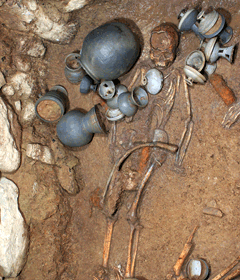
1. Unearthed Human Skeletons
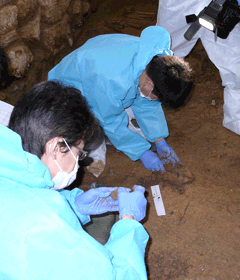
2. Collecting Human Skeletons
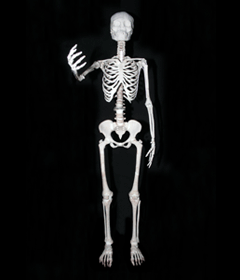
3. Reconstruction of the Bones
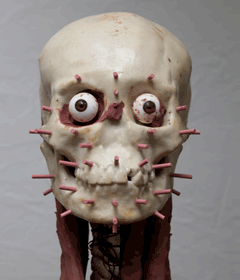
4. Reconstruction of the Face
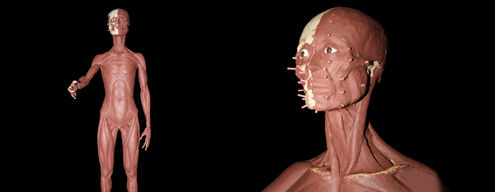
5. Reconstruction of the Full Body
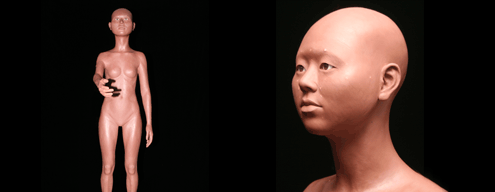
6. Reconstruction of the Full Body
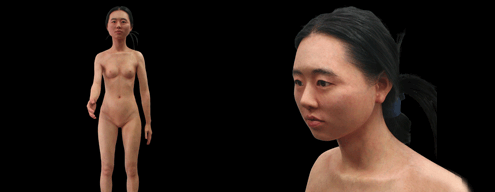
7. Reconstruction of the Full Body
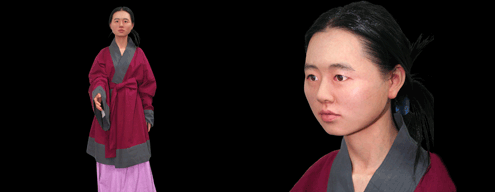
8. Reconstruction of the Full Body
Secret Codes on Wood: Wooden Tablets (2009)

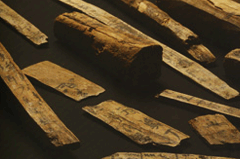
Our research institute and Buyeo National Museum jointly hosted a special exhibition entitled Special Exhibition: Secret Codes on Wood – Wooden Tablets in 2009. The exhibition was conceived with the intention of introducing to the public actual wooden tablets along with the scholarship accumulated in the forty years since their discovery at Gyeongju Anapji Pond in 1972. Since then, more than 500 wooden tablets have been discovered in diverse areas ranging from the capitals of ancient kingdoms to key local regions. The exhibition pamphlet entitled Secret Codes on Wood – Wooden Tablets introduces the wooden tablets of Baekje, Silla and Goryeo, as well as the current status of research into wooden tablets in China and Japan. As an adjunct to this exhibition, we held an international academic symposium on “Ancient Wooden Tablets and Fortresses” to discuss the current development of Korean researc
Our research institute and Buyeo National Museum jointly hosted a special exhibition entitled Special Exhibition: Secret Codes on Wood – Wooden Tablets in 2009. The exhibition was conceived with the intention of introducing to the public actual wooden tablets along with the scholarship accumulated in the forty years since their discovery at Gyeongju Anapji Pond in 1972. Since then, more than 500 wooden tablets have been discovered in diverse areas ranging from the capitals of ancient kingdoms to key local regions. The exhibition pamphlet entitled Secret Codes on Wood – Wooden Tablets introduces the wooden tablets of Baekje, Silla and Goryeo, as well as the current status of research into wooden tablets in China and Japan. As an adjunct to this exhibition, we held an international academic symposium on “Ancient Wooden Tablets and Fortresses” to discuss the current development of Korean research
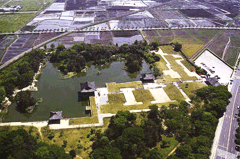
Anapji Pond, Gyeonju
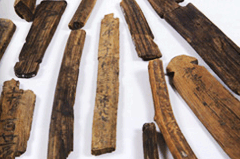
Wooden Tablet from Anapji Pond, Gyeongju
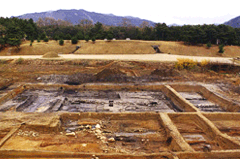
Temple Site in Neungsan-ri, Buyeo
Wooden Tablet from the Temple Site, in Neungsan-ri Buyeo
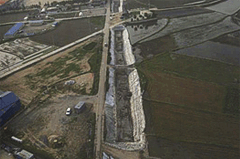
Ssangbungni, Buyeo
Wooden Tablet from Ssangbuk-ri, Buyeo

Sinanseon
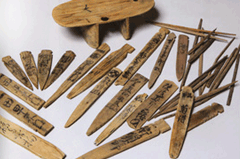
Wooden Tablet from Sinanseon
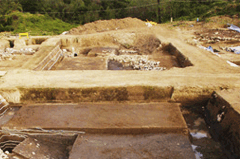
Seongsansanseong Fortress, Haman
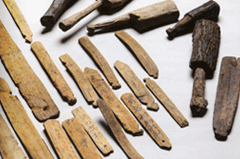
Wooden Tablet from Seongsansanseong Fortress, Haman
Temple Sites in Gyeongsangnam-do (2009)

The Gaya National Research Institute of Cultural Heritage has been surveying old temple sites and stone pagodas in the Gyeongsangnam-do region since 2009, as part of its long-term goal of establishing a solid base of knowledge about the Gaya cultural sphere. In the first phase of this survey project, we investigated temple sites in Uiryeong, Changnyeong, and Haman, concentrating on nineteen stone pagodas and their surroundings. We inspected four sites in Uiryeong, including the three-story pagoda of the Bocheonsa temple site, nine sites in Changnyeong, including Suljeong-ri’s east and west three-story pagodas, and six sites in Haman, including the stone pagoda at the Jurisa Temple Site. This inspection and measurement survey provided us with primary information needed to draw up development plans for the conservation and restoration of the historic sites.
The Gaya National Research Institute of Cultural Heritage has been surveying old temple sites and stone pagodas in the Gyeongsangnam-do region since 2009, as part of its long-term goal of establishing a solid base of knowledge about the Gaya cultural sphere. In the first phase of this survey project, we investigated temple sites in Uiryeong, Changnyeong, and Haman, concentrating on nineteen stone pagodas and their surroundings. We inspected four sites in Uiryeong, including the three-story pagoda of the Bocheonsa temple site, nine sites in Changnyeong, including Suljeong-ri’s east and west three-story pagodas, and six sites in Haman, including the stone pagoda at the Jurisa Temple Site. This inspection and measurement survey provided us with primary information needed to draw up development plans for the conservation and restoration of the historic sites.
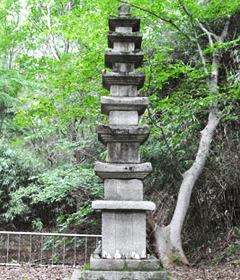
Seven-story Stone Pagoda of Munsansa Temple in Uiryeong
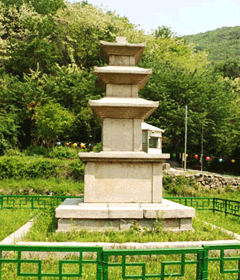
Three-story Stone Pagoda at Bochensa Temple Site in Uiryeong
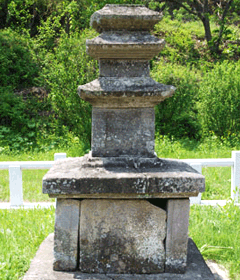
Three-story Stone Pagoda in Seonghwang-ri, Uiryeong
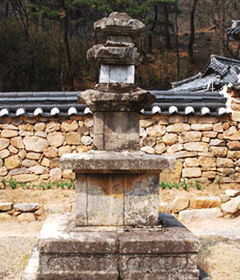
Three-story Stone Pagoda at Yaksajeon Hall of Gwallyongsa Temple in Changnyeong
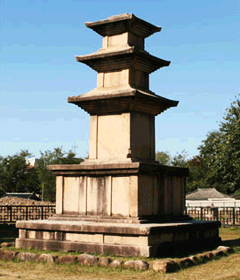
East Three-story Stone Pagoda in Suljeong-ri, Changnyeong
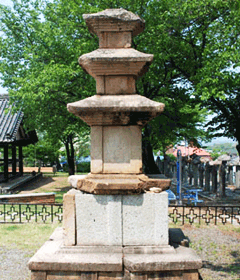
East Side of the Three-story Stone Pagoda in Toecheon-ri, Changnyeong
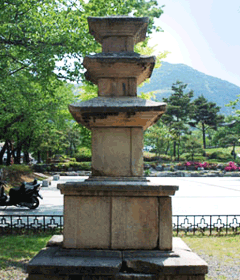
West Side of the Three-story Stone Pagoda in Toecheon-ri, Changnyeong
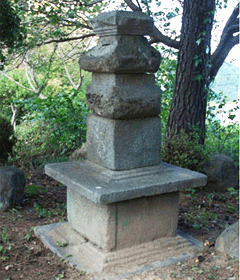
Three-story Stone Pagoda in Mugi-ri, Haman
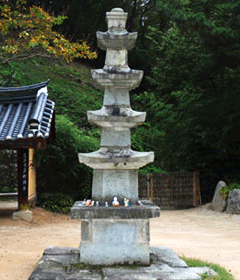
Five-story Stone Pagoda of Jangchunsa Temple in Haman
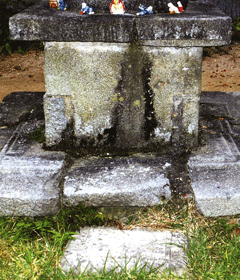
Pedestal of the Five-story Stone Pagoda of Jangchunsa Temple in Haman
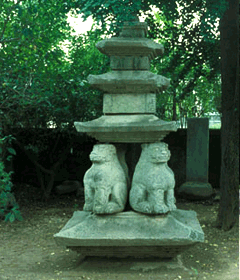
Stone Pagoda with Four Lions at Jurisa Temple Site in Haman (1991)
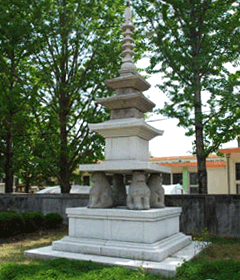
Stone Pagoda with Four Lions at Jurisa Temple Site in Haman (2009)
Early Wooden Wares of Korea (2008)

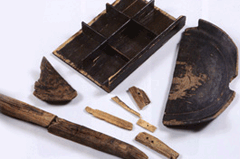
The excavations of Seongsansanseong Fortress unearthed a large number of wooden relics of various forms, including wooden tablets. Our findings on the excavated wooden wares unearthed from the fortress and our studies on methods of curing and preserving them were compiled and published into a sourcebook titled Early Wooden Wares of Korea. As Korea’s first sourcebook on wooden wares, it includes not just information about the wooden wares of Haman but also current information on all wooden wares excavated throughout the country, thus constituting a valuable resource material for research into wooden wares. The content of the sourcebook includes analyses of the extent of excavation, types and uses of wooden wares, and even the types of wood used, as discovered while treating them for preservation. The book also introduces the Japanese archaeological community’s research findings on and methods of conserving wooden wares.
The excavations of Seongsansanseong Fortress unearthed a large number of wooden relics of various forms, including wooden tablets. Our findings on the excavated wooden wares unearthed from the fortress and our studies on methods of curing and preserving them were compiled and published into a sourcebook titled Early Wooden Wares of Korea. As Korea’s first sourcebook on wooden wares, it includes not just information about the wooden wares of Haman but also current information on all wooden wares excavated throughout the country, thus constituting a valuable resource material for research into wooden wares. The content of the sourcebook includes analyses of the extent of excavation, types and uses of wooden wares, and even the types of wood used, as discovered while treating them for preservation. The book also introduces the Japanese archaeological community’s research findings on and methods of conserving wooden wares.
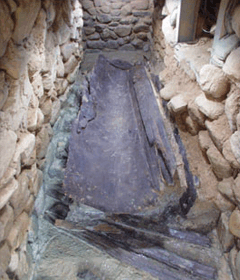
Wood coffin from Songhyeon-dong Ancient Tomb No. 7 of Changnyeong
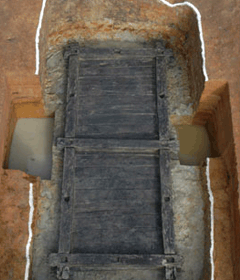
Wooden storage facility from Gwanbuk-ri of Buyeo
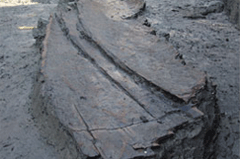
Wooden boat from Bibong-ri of Changnyeong
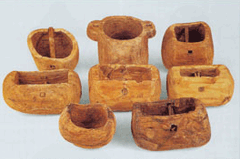
Wooden bucket from the Art Gallery Site of Gyeongju National Museum
Tombs of Gaya (2007)

Excavations and research on Gaya tombs were first begun in 1913 during the period of Japanese rule by Japanese scholars such as Sekino Tadashi and Tani Saiichi, who excavated the ancient tombs on Sujeongbong and Okbong Peaks in Jinju. Since then, more than 150 tumuli sites have been discovered in the region, encompassing not just Gyeongsangnam-do Province and Busan but Gyeongsangbuk-do and Jeolla-do Provinces too. Therefore, the Gaya National Research Institute of Cultural Heritage has established a knowledge database of Gaya tombs of this extended region, containing information on excavation dates, major research findings, distribution maps and the current conditions of the tombs in west and east Gyeongsangnam-do and information about the current findings on Gaya tombs in Busan, Gyeongsangbuk-do and Jeolla-do Provinces.
Excavations and research on Gaya tombs were first begun in 1913 during the period of Japanese rule by Japanese scholars such as Sekino Tadashi and Tani Saiichi, who excavated the ancient tombs on Sujeongbong and Okbong Peaks in Jinju. Since then, more than 150 tumuli sites have been discovered in the region, encompassing not just Gyeongsangnam-do Province and Busan but Gyeongsangbuk-do and Jeolla-do Provinces too. Therefore, the Gaya National Research Institute of Cultural Heritage has established a knowledge database of Gaya tombs of this extended region, containing information on excavation dates, major research findings, distribution maps and the current conditions of the tombs in west and east Gyeongsangnam-do and information about the current findings on Gaya tombs in Busan, Gyeongsangbuk-do and Jeolla-do Provinces.
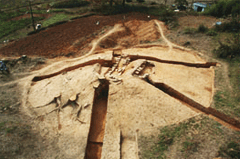
Ancient Tombs No. 36 in Naeseong-ri, Goseong
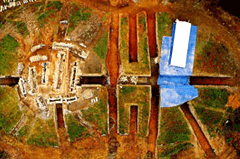
Ancient Tombs in Songhak-dong, Goseong
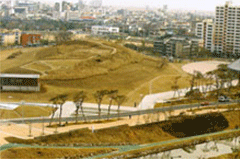
Ancient Tombs in Daeseong-dong, Gimhae
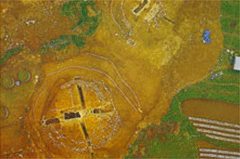
Ancient Tombs in Gyeongsan-ri, Uiryeong
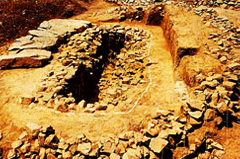
Ancient Tombs No. 4 in Gyo-dong, Changnyeong
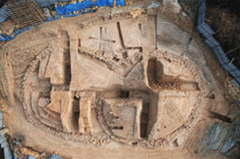
Ancient Tombs in Songhyeon-dong, Changnyeong
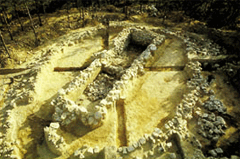
Ancient Tombs in Okjeon, Hapcheon
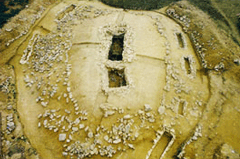
Ancient Tombs in Okjeon, Hapcheon
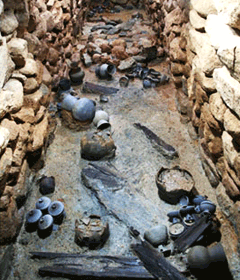
Stone Chamber (north-south) of Ancient Tombs No. 6 in Songhyeon-dong, Changnyeong
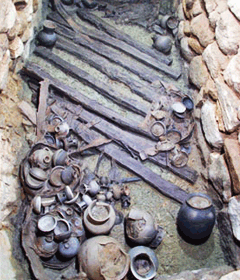
Stone Chamber of Songhyeongdong Ancient Tombs No. 7 in Changnyeong - after collecting remains
Prehistoric Culture of the Gyeongsangnam-do Region (2006)

Excavations and research on Gaya tombs were first begun in 1913 during the period of Japanese rule by Japanese scholars such as Sekino Tadashi and Tani Saiichi, who excavated the ancient tombs on Sujeongbong and Okbong Peaks in Jinju. Since then, more than 150 tumuli sites have been discovered in the region, encompassing not just Gyeongsangnam-do Province and Busan but Gyeongsangbuk-do and Jeolla Provinces too. Therefore, the Gaya National Research Institute of Cultural Heritage has established a knowledge database of Gaya tombs of this extended region, containing information on excavation dates, major research findings, distribution maps and the current conditions of the tombs in west and east Gyeongsangnam-do and information about the current findings on Gaya tombs in Busan, Gyeongsangbuk-do and Jeolla Provinces
Excavations and research on Gaya tombs were first begun in 1913 during the period of Japanese rule by Japanese scholars such as Sekino Tadashi and Tani Saiichi, who excavated the ancient tombs on Sujeongbong and Okbong Peaks in Jinju. Since then, more than 150 tumuli sites have been discovered in the region, encompassing not just Gyeongsangnam-do Province and Busan but Gyeongsangbuk-do and Jeolla Provinces too. Therefore, the Gaya National Research Institute of Cultural Heritage has established a knowledge database of Gaya tombs of this extended region, containing information on excavation dates, major research findings, distribution maps and the current conditions of the tombs in west and east Gyeongsangnam-do and information about the current findings on Gaya tombs in Busan, Gyeongsangbuk-do and Jeolla Provinces
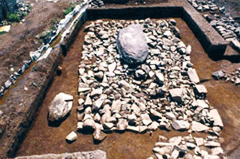
Prehistoric Site in Daeya-ri, Geochang
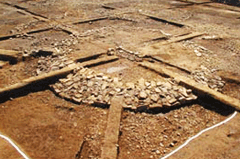
Prehistoric Site in Jin-dong, Masan
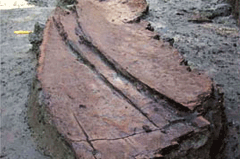
Prehistoric Site in Bibong-ri, Changnyeong
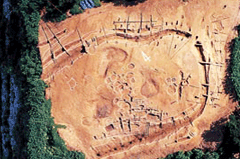
Prehistoric Site in Namsan, Changwon
Wooden Tablets of Early Korea (2004)

This catalog is a comprehensive compilation of all the wooden tablets found in South Korea, including the more than 280 tablets collected from Seongsansanseong Fortress in Haman during a series of 15 excavations conducted since 1991, as well as wooden tablets found in other areas such as Gyeongju Anapji Pond, Buyeo Gwanbuk-ri, and Hanam Iseongsanseong Fortress. As Korea’s first sourcebook on wooden tablets, it is a highly valuable resource for research on Korean wooden tablets, containing descriptions of the sites where the wooden tablets were discovered, the forms and contents of the scripts on the tablets, and infrared photos.
This catalog is a comprehensive compilation of all the wooden tablets found in South Korea, including the more than 280 tablets collected from Seongsansanseong Fortress in Haman during a series of 15 excavations conducted since 1991, as well as wooden tablets found in other areas such as Gyeongju Anapji Pond, Buyeo Gwanbuk-ri, and Hanam Iseongsanseong Fortress. As Korea’s first sourcebook on wooden tablets, it is a highly valuable resource for research on Korean wooden tablets, containing descriptions of the sites where the wooden tablets were discovered, the forms and contents of the scripts on the tablets, and infrared photos.
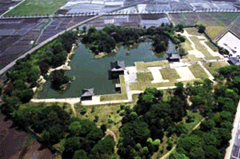
Anapji Pond
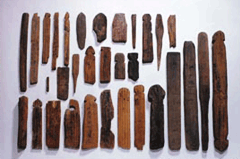
Wooden Tablet from Anapji Pond
Wolseonghaeja
Wooden Tablet from Wolseonghaeja
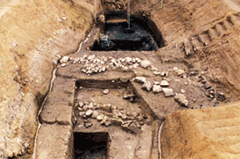
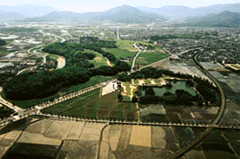
Seongsansanseong Fortress – a place where a mass of wooden tablets were first discovered
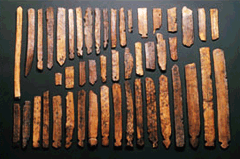
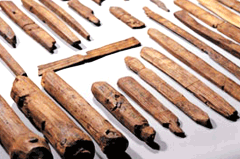
Wooden Tablet from Seongsansanseong Fortress
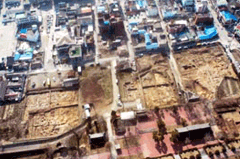
Historic Site in Gwanbuk-ri, Buyeo
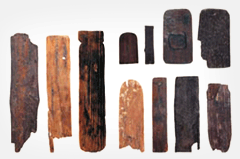
Wooden Tablet from Gwanbuk-ri, Buyeo
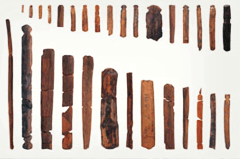
Wooden Tablet from Iseongsanseong Fortress in Hanam
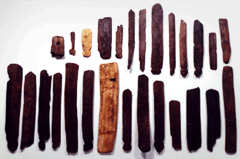
Wooden Tablets
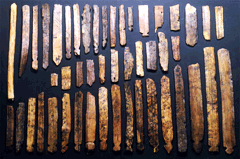
Wooden Tablets
Stone Caves in China (2003)
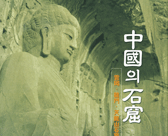
This book is a compilation of our research findings and photos on China’s 雲岡石窟, 龍門石窟, and 天龍山石窟, an international research project we conducted in 1997. Providing information collected directly from the actual sites, the book has been praised as a meaningful resource that will further our understanding of interactions among the Buddhist cultures of Korea, China, and northwest India and provide valuable assistance to efforts to identify the origins of Buddhist sculptures from ancient Korea and Japan.